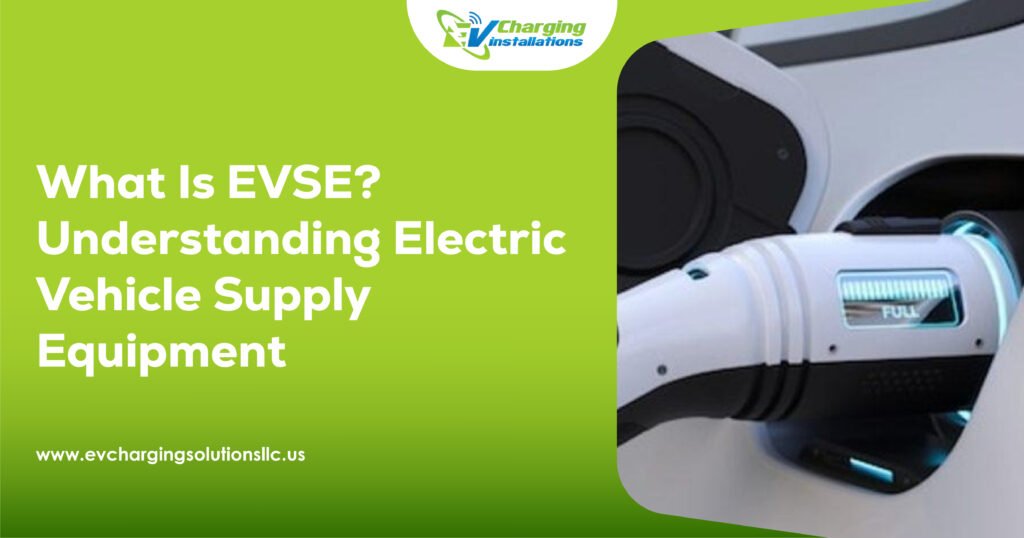
Due to the emergence of electric vehicles (EVs), the demand for electric vehicle supply equipment (EVSE) has soared. EVSE is the term that describes the whole charging system that is able to charge an electric car. Simply put, it is the appliance that allows charging an EV with the help of the electric grid. Now, we are going to further explore the meaning of EVSE and its relevance to the future of transportation.
What is EVSE?
Electric Vehicle Supply Equipment (EVSE) is the equipment that is needed to recharge electric cars safely. It consists of the actual charging point and the electrical equipment that enables this to happen in the form of the flow of electricity across the grid and into the car battery. Such systems make it possible to charge electric vehicles safely, efficiently and in a short time.
EVSE may be located in commercial premises, residences, workplaces and in public charging facilities. It is critical in the shift to electric vehicles, which will contribute to the development of clean energy and lessen the reliance on fossil fuels.
Types of EVSE
EVSE comes in various forms, each offering different charging speeds and features. Broadly, EVSE can be divided into three levels:
Level 1 Charging
The simplest type of EVSE is level 1. It charges the EV with a normal household outlet of 120 volts. Although it is slow, it suits best those who charge overnight, or when one has shorter trips. Depending on the size of the battery, Level 1 charging can require between 8 and 20 hours to complete an EV charge.
Level 2 Charging
Level 2 is charged using a 240-volt outlet and charges far quicker than Level 1. It is mainly applied at home, work and in the parking stations. Level 2 has the capability to charge an EV in between 4 and 8 hours, depending on the vehicle and battery capacity. The level is the most popular among the owners of the electric cars since they can have home charging that is fast enough and convenient at the same time.
Level 3 Charging (DC Fast Charging)
The highest EVSE level is Level 3, which is also referred to as DC Fast Charging (DCFC). It charges the vehicle using direct current (DC), bypassing the onboard charger in the car itself and providing power directly to the battery. This enables quick charging, which can sometimes take as little as 30 minutes to charge 80 percent or even less. The level 3 chargers are mostly located in highway rest stops, commercial and public charging hubs.
Check out our complete guide on how an electric vehicle works, including components, charging basics, and energy flow.
How Does EVSE Work?
The primary function of EVSE is to provide the necessary power to charge an electric vehicle. It works by establishing a connection between the electric vehicle and the power grid. Here’s a simplified overview of the process:
- Connection: When you plug your EV into an EVSE station, the system establishes communication with the vehicle’s onboard charger.
- Power Transfer: The EVSE supplies the appropriate voltage and current for the vehicle’s battery.
- Charging Monitoring: The system monitors the charging process, ensuring the battery is not overcharged and the system remains within safe operating limits.
- Completion: Once the battery is charged, the system shuts off the power flow, and the vehicle is ready to use.
Benefits of Electric Vehicle Supply Equipment
EVSE is a good investment with a number of advantages, particularly with the increasing spread of electric cars. The following are some of the reasons why EVSE is significant:
1. Fast and Efficient Charging
EVSE stations, particularly Level 2 and Level 3 stations, have a shorter charging period, and hence, EV owners do not have to wait long. This is necessary since more individuals will switch to electric cars.
2. Convenience
Electric vehicle owners can charge their vehicles overnight with the introduction of home EVSE systems, which charge their cars to the point of full charge by morning. There is also a rise in the availability of public charging stations, thus providing charging opportunities during transit.
3. The Sustainable Energy Support.
EVSE promotes the utilization of renewable energy. A lot of the charging stations that are available to the masses utilize solar energy or other green energy systems; this minimizes the carbon footprint of the electric vehicles still further.
4. Cost Savings
Though EVSE systems can involve the initial costs of installation, they can result in savings in the long term. It is also generally cheaper to charge an electric vehicle at home compared to gas and electricity is generally a more stable price compared to fuel.
How to Choose the Right EVSE?
There are a number of factors to consider when choosing an EVSE to use at home or in a business environment:
Charging Speed
Select an EVSE depending on the speed at which you require to charge your EV. Level 3 charging could be the most suitable when you are able to make long journeys with your car and need a quick charge. But on the daily commute, the Level 2 charging will be sufficient.
Compatibility
Make sure that the EVSE is appropriate to your battery capacity and charging port on your electric car. Not every EVSE system fits one and the same car, so one should be able to select the one that fits.
Location
Take into account the place where the EVSE is to be mounted. You might have to install a special 240-volt outlet in case you are installing a home charging station. Workplace or public stations will have to be conveniently available to everybody.
Conclusion
The EVSE is an essential component of the expanding EV infrastructure and it allows the successful and effective charging of electric vehicles. Offering varying degrees of charging, fast charging, and the ease of charging at home, EVSE makes it possible to keep electric cars an affordable and viable alternative among the current drivers. With the transition to the electric transport in the world, EVSE will keep the key role in developing a sustainable mobility future.
Explore our full range of EV charging products and solutions to find the right equipment that fits your home, business, or commercial charging needs.