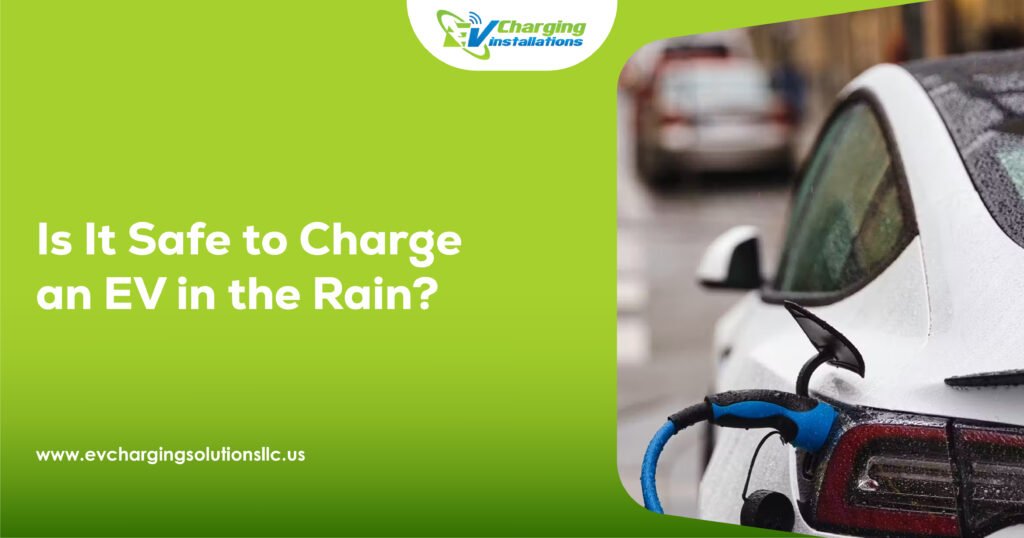
The number of electric cars is increasing on the global roads. With an increasing number of drivers going electric, there are, of course, more practical issues, among them safety. The question that is asked most often is: Can you charge an EV in the rain?
The answer is yes, it is safe to charge an electric vehicle in the rain. EVs and charging stations are specially designed to be used in different weather conditions, including heavy rain. But knowing why it is safe can make you have more confidence in plugging in, even in bad weather.
How EV Charging Systems Are Designed for Weather
The current electric cars and charging devices have been designed with a high level of safety. Manufacturers are aware that drivers would leave their cars to be charged, even in rain, snow, or extreme temperatures.
The chargers have weatherproof seals and insulation. You do not have the electricity flowing the moment you plug your EV into a charging station. Rather, a safe communication between the charger and the vehicle exists. Delivery of power can only be done after a safe and stable connection is assured.
This avoids the possibility of exposed live current during insertion or removal of the plug. That is to say, you never deal with a live wire.
Are Charging Stations Waterproof?
Public charging stations and home wall chargers are designed to be water-resistant and weatherproof. Most equipment carries an IP (Ingress Protection) rating, which indicates resistance to dust and water.
For example:
- IP65 or higher ratings protect against water jets and rain.
- Outdoor charging cables are insulated and sealed.
- Charging ports on EVs have protective covers.
Manufacturers anticipate rain exposure and test equipment accordingly. If charging in wet conditions were unsafe, EV adoption would not be practical in many parts of the world.
Want to better understand charging safety? Learn how EV charging stations work and stay safe in all weather
What Happens If Water Touches the Charging Cable?
This is among the largest misgivings among the drivers- electricity and water, put together, are a deadly combination. Nevertheless, EV charging systems are insulated and grounded against electrical hazards.
When water comes in contact with the outer part of the cable or connector, it does not conduct electricity to the outside since:
- The cable insulation eliminates leakage.
- The charging can be charged only when it is fully connected.
- Ground fault detectors are used to cut off power when some abnormalities are detected.
These safety measures are incorporated to make sure rainwater does not pose a threat to electricity.
Is It Safe to Plug In With Wet Hands?
Yes, it is safe to plug in your EV during rain—even if your hands are slightly wet. The design of EV charging connectors prevents exposure to live electrical components.
Still, general safety habits are always recommended:
- Avoid submerging connectors in standing water.
- Make sure connectors are free from debris before plugging in.
- Use manufacturer-approved charging equipment.
As long as you are using certified chargers and cables, rain alone does not pose a danger.
What About Lightning Storms?
It is all safe to charge during light or moderate rain. Nevertheless, when there is a lightning storm, it is a prudent move to adhere to general electrical safety rules.
Although the charging stations used by EVs are grounded and shielded, lightning may lead to surges in power. When you are afraid of being caught in bad weather, all you have to do is wait, and the storm will end. This is a precaution that can be used on a lot of household electronics, and not only EV charging.
Safety Features Built Into EV Charging
Electric vehicles and charging stations include multiple layers of protection:
- Ground Fault Circuit Interrupters (GFCI)
- Automatic shutoff systems
- Insulated connectors
- Sealed charging ports
- Surge protection mechanisms
If the system detects a fault, charging automatically stops. These safety mechanisms are part of international electrical standards governing EV charging infrastructure.
Charging at Home vs. Public Stations in the Rain
When it comes to charging at home or in one of the public stations, the same safety principles are applied.
Level 2 chargers are weatherproof. Level 2 chargers are installed at home. In case your home charging occurs in the hands of a certified electrician who will make sure the unit can withstand the outdoor environment, the issue of rain will not be a big problem.
The charging networks deployed in the country are also designed to endure all year round. Stations are kept in good condition and checked regularly to confirm that it meets the safety regulations.
Common Myths About Charging an EV in the Rain
Despite the engineering behind EV systems, several myths persist.
Myth 1: Rain can cause an electric shock while charging.
Modern EV systems are sealed and insulated to prevent exposed live current.
Myth 2: Water can damage the battery during charging.
The battery is completely enclosed and protected within the vehicle chassis.
Myth 3: You should never charge outdoors in bad weather.
EVs are specifically designed for outdoor charging environments.
These misconceptions often stem from general fears about mixing electricity and water. In reality, EV charging technology accounts for those risks.
When Should You Avoid Charging?
While rain is not an issue, you should avoid charging if:
- The charging cable is visibly damaged.
- The connector has cracks or exposed wiring.
- The charging station appears broken or flooded.
- You see warning messages on your vehicle dashboard.
These precautions apply regardless of weather conditions.
Final Verdict: Yes, It’s Safe
It is safe to recharge your electric car during the rain. EV manufacturers create vehicles and charging systems with several layers of protection against exposure to water. Rain is not a source of safety hazard when charging is done using certified charging equipment.
With the growing popularity of EV infrastructure, the weather-resistant technology can guarantee drivers that they can charge in almost any environment.
If you are new to electric vehicles, it is easier to understand how charging systems are developed to address common concerns. Even on a rainy day, without fear, you can plug in, even with the correct equipment and normal precautions.
Upgrade your setup with our professional EV charger installation services for safe and reliable home charging in any weather.